Handmade Soap Manufacturing
Handmade Soap manufacturing
A complete OEM/ODM solution for cosmetic brands
Handmade soap is increasingly being chosen by brands due to its safety, gentleness, and ability to create a distinctive mark in the market. This article will provide a comprehensive overview of the uses, ingredients, processing methods, and important criteria when choosing a partner for handmade soap production, helping businesses optimize quality and build a sustainable competitive advantage.
1. What Is Handmade Soap And What Is Its Potential For Market Growth?
Handmade soap is a product manufactured through the saponification of vegetable oils with an alkaline solution, usually using the cold process saponification method.
This method helps retain the natural glycerin formed during the reaction, thereby increasing its moisturizing properties and leaving skin soft and smooth after use.
Unlike commercially produced soap, handmade soap typically uses vegetable oils, butters, and natural additives. As a result, the product is very gentle and aligns with the trend of natural, environmentally friendly cosmetics.
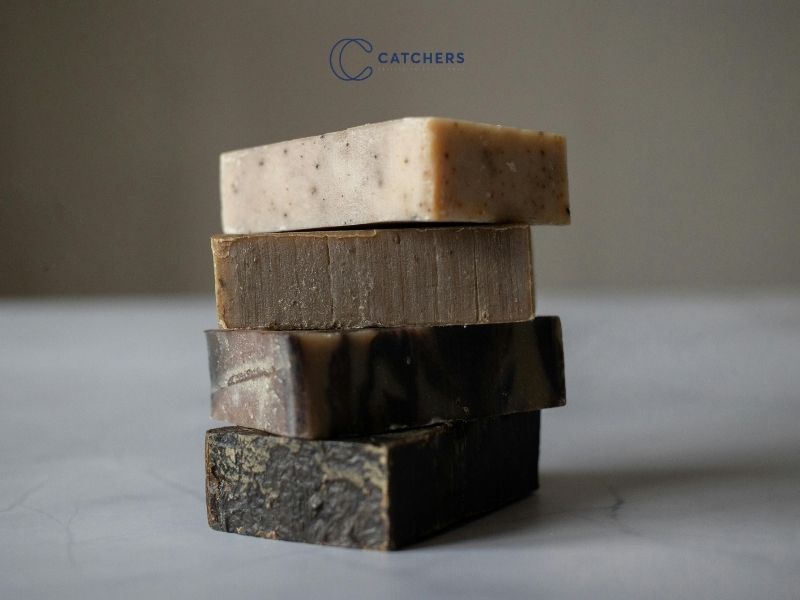
For cosmetics businesses, developing a line of handcrafted soaps offers several advantages:
- It creates differentiation from mass-produced cleansing products;
- It aligns with the trend of natural and sustainable cosmetics; and
- It’s easy to develop into a complete body care product line.
This segment is suitable for both startups and established brands with a personal care product ecosystem.
2. Uses & Composition
Catchers’ flexible R&D capabilities allow for the creation of handcrafted soap lines with diverse ingredients and uses to meet brand needs.
2.1. Specific Applications During Processing
- Intensive Moisturizing: Thanks to its high glycerin content and superfatting (added shea butter after saponification).
- Therapeutic Soap: Uses clays, activated charcoal, or sea salts for deep cleansing, detoxification, and to help treat back/body acne
- Solid Shampoo Bar: pH-balanced formula, sulfate-free, replaces traditional plastic bottles, and is environmentally friendly
2.2. Commonly Used Components
| Component Group | Representative Component Name | Product Benefits |
| Base Oil | Extra Virgin Olive Oil, Almond Oil, Rice Bran Oil | This determines the hardness, moisturizing, and lathering properties |
| Nutritional Additives | Shea Butter, Goat Milk, Honey | Enhances the skin’s ability to soften, soothe, and repair itself. |
| Color & Scent | Natural herbal powder (Turmeric, Coffee), Pure essential oils | Create eye-catching colors and therapeutic scents (Aromatherapy). |
.
2.3. Instructions for Use (Brand Orientation)
As a contract manufacturer, Catchers recommends that your brand provide detailed guidance to end consumers to optimize the user experience and maintain product longevity.
A. Techniques for Optimizing User Experience
- Activating the Soap: Wet the handmade soap bar and the area to be cleansed with warm water. Warm water helps open pores and activate the plant oils in the soap.
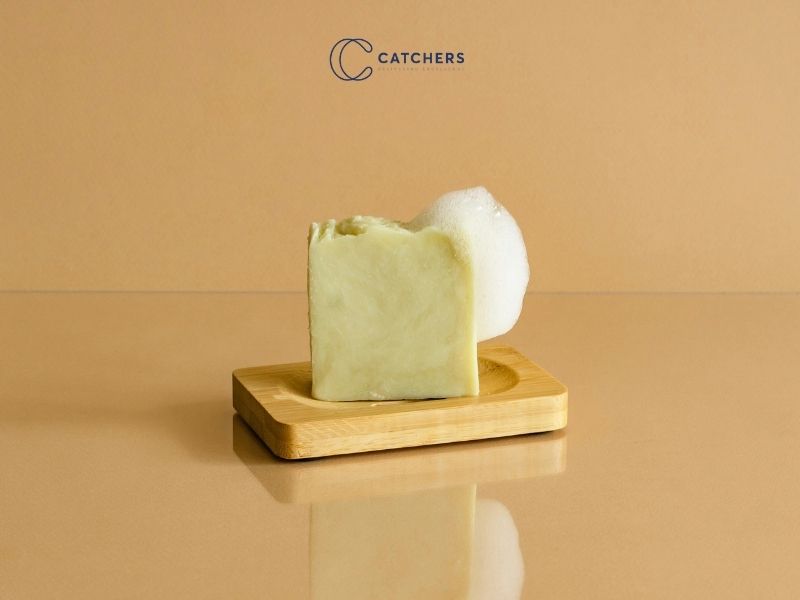
- Creating a Rich Lather: Use a specialized foaming mesh bag, your hands, or a bath sponge to create a thick, creamy lather. The fine lather allows the active ingredients, such as Glycerin and other nourishing substances, to disperse and penetrate the skin more easily.
- Therapeutic Massage: Gently massage the lather onto your skin in circular motions. The ideal time is 60-90 seconds to allow your skin to absorb the therapeutic benefits from the essential oils and nutrients (e.g., activated charcoal, clay) contained in the soap bar.
- Rinse Thoroughly: Rinse off the lather with cool or lukewarm water to help tighten pores and lock in moisture.
B. Instructions for Preserving Handmade Soap (Extending Its Shelf Life)
Because handmade soap retains glycerin (a natural humectant), proper storage is crucial.
- Use a Drainage Tray: Always place soap bars on a tray with optimal drainage (e.g., a wooden tray with slots, a ceramic tray with raised bumps). This ensures water doesn’t accumulate, allowing the soap to dry quickly and maintain its hardness.
- Avoid Soaking: Never leave soap bars soaking in water for extended periods (e.g., at the bottom of a bathtub or on a flat dish) as this will soften them and cause them to melt quickly.
- Storage and Preservation: Unused soap bars should be kept in their original packaging in a cool, dry place (wardrobe or drawer) to preserve their natural fragrance and allow the soap to continue its gentle “curing” process, increasing its lifespan.
3. Ideal Users of Outsourced Production Services
Catchers’ handcrafted soap manufacturing service is suitable for many business models in the cosmetics industry.
Cosmetics businesses:
Brands looking to expand their range of cleansing products or develop a line of natural cosmetics.
Cosmetics startups:
New businesses needing a complete production solution without investing in a factory or research team.
Hotels, resorts, and spas:
Businesses looking to develop a line of amenities soaps or branded gifts.
Retailers and distributors
Businesses need a consistent supply of high-quality handmade soap with the ability to customize formulas.
4. Considerations When Using Outsourced Soap Production Services
To develop effective handmade soap products, businesses need to pay attention to several important factors in the manufacturing process.
Soap aging time:
The cold saponification method requires an aging time of approximately 4–6 weeks for the soap to reach a safe pH level and optimal hardness. This timeframe should be factored into the product launch plan.
Superfat content:
The percentage of superfat directly affects the moisturizing ability and lathering of the soap. The formula needs to be adjusted to suit the target skin type.
Color and Scent Stability:
The color and scent from natural ingredients can change over time. Choosing the right ingredients and proportions will help stabilize the product.
Suitable Packaging Design:
Handmade soaps are often packaged in kraft paper, cardboard boxes, or environmentally friendly materials to match the product’s positioning.

5. Reasons to Choose Catchers for Handmade Soap Manufacturing
By choosing Catchers, you are guaranteed quality, legal compliance, and professionalism.
| Criteria | Catchers Commitment | Customer Benefits |
| Cold Soap Technology | Strictly control temperature and humidity during the composting process. | The soap retains 100% natural glycerin, making it gentle and exceptionally moisturizing. |
| Quality Raw Materials | Use only premium, sustainably sourced vegetable-based base oils. | Wholesome products containing no animal fats, and is completely safe. |
| Comprehensive Support | Assistance with pH and microbiological testing, and completion of product registration documents at the Ministry of Health. | Confidently distribute legal products and enhance brand reputation. |
| Variety of Designs | Ability to create shapes, engrave logos on soap bars, and a variety of molds. | Unique and aesthetically pleasing products creates a strong impression on customers |
Let Catchers help you create handmade soaps that not only cleanse but also nourish and pamper your skin.
6. Catchers – Your Reputable Handmade Soap Manufacturing Partner
Businesses or partners seeking solutions to develop a unique line of Handmade Soaps can rely on Catchers, a partner that supports them from idea generation and formula research to packaging design, production, completion, and market delivery.
Contact Catchers today for a free consultation and detailed quote on our comprehensive soap manufacturing services, tailored to your needs and brand positioning.
Catchers – Superior & Specialized Contract Manufacturing
Vietnam’s leading reputable cosmetic manufacturing company
Certified with COA, MSDS, FDA, and IFRA – ensuring product safety and quality.
Ho Chi Minh City Hotline: 0399 711 599
Hanoi Hotline: 0398 711 599
Email: info@catchers.vn
QUY TRÌNH GIA CÔNG TẠI CATCHERS