Perfume Longevity: Key Factors You Should Know
Perfume longevity is one of the most important considerations for fragrance lovers when shopping. So what exactly is perfume longevity, and what affects how long a scent lingers? How can you test it, and how can you make it last longer? This article will help you understand the topic in depth. Read on with Catchers for a complete A-to-Z guide!
1. What Is Perfume Longevity?
Perfume longevity is the length of time a scent stays on the body after application. It can range from a few hours to a full day. Many factors influence longevity, including the concentration of essential oils, the fragrance composition, the wearer’s skin chemistry, and the surrounding environment.
Longevity reflects the quality of a perfume and conveys the wearer’s style and preferences. A long-lasting, well-suited scent becomes a “secret weapon” — letting you stand out with confidence and leave a memorable impression in any setting.
Perfume longevity is commonly divided into four levels:
- Short Longevity (under 2 hours): Perfumes lasting 1 to 2 hours typically have a low essential oil concentration of 2–4%. They feature light, quickly-evaporating scents — ideal for a brief refresh..
- Medium Longevity (2–4 hours): Perfumes lasting 2 to 4 hours generally contain a moderate essential oil concentration of 5–15%. They have a soft, airy scent suited to those who prefer understated elegance.
- Good Longevity (4–6 hours): Perfumes lasting 4 to 6 hours usually have a high essential oil concentration of 15–20%. This is a popular category — the scent holds up throughout the day.
- Long Longevity (over 8 hours: Perfumes lasting more than 8 hours typically have a very high essential oil concentration of 20–40%. This is the perfect choice for exceptional staying power, often lasting an entire day.
2. Factors That Affect Perfume Longevity
Essential Oil Concentration
A perfume’s longevity depends largely on its essential oil concentration. The higher the oil ratio, the longer the scent stays on the skin. This explains why two perfumes of the same family can have noticeably different longevity.
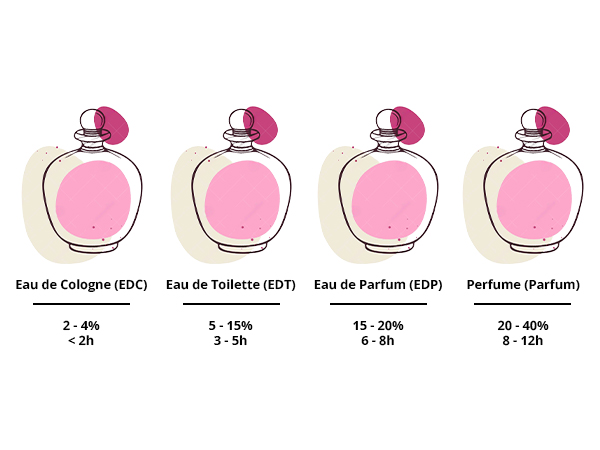
Below are the standard concentration categories and their typical longevity:
- Eau de Cologne (EDC): Essential oil concentration of about 2–4%. EDC typically lasts under 2 hours.
- Eau de Toilette (EDT): Essential oil concentration of 5–15%. EDT lasts about 3–5 hours on average.
- Eau de Parfum (EDP): Essential oil concentration of 15–20%. EDP usually lasts 6–8 hours.
- Parfum (Extrait de Parfum): Essential oil concentration of 20–40%. Lasts 8–12 hours, sometimes a full day.
Premium perfume lines with higher essential oil content generally have longer-lasting scents.
Fragrance Composition
Perfume longevity isn’t determined by essential oil concentration alone — fragrance composition also plays a role. Each aromatic ingredient has a different staying power, which affects how long the scent holds:
- Low-longevity notes: Citrus, herbs, and light florals (lavender, mint). These evaporate quickly, resulting in shorter wear time. They deliver a fresh, crisp impression but fade fast.
- High-longevity notes: Woods (sandalwood, patchouli) and spices (amber, vanilla, cinnamon). These notes create a warm, alluring impression and linger on the skin for hours.
- Longevity-enhancing notes: Musk and amber. These have strong holding power and help a fragrance cling longer to skin and clothing.
Weather and Environment
Temperature and humidity affect how a perfume evaporates and adheres:
- Hot, humid weather: High temperatures accelerate evaporation, shortening longevity. Heavy perspiration in hot, humid conditions can also alter the scent.
- Cold weather: Lower temperatures slow evaporation, helping the scent stay on the skin longer. Aromas also tend to project more gradually in the cold.
Your work environment also affects longevity. Air-conditioned spaces with stable temperature and humidity preserve the scent longer. By contrast, outdoor environments with constant movement, heat, and sun cause perfumes to dissipate more quickly.
Body Characteristics
Each person’s individual body characteristics can affect how a perfume wears:
- Oily skin: Holds scent longer because natural skin oils help lock in the fragrance.
- Dry skin: Perfume evaporates more quickly — reapplication or moisturizing beforehand helps..
- Skin pH: Your skin’s natural pH can shift a fragrance. The same perfume can smell quite different on different people.
Application Spots
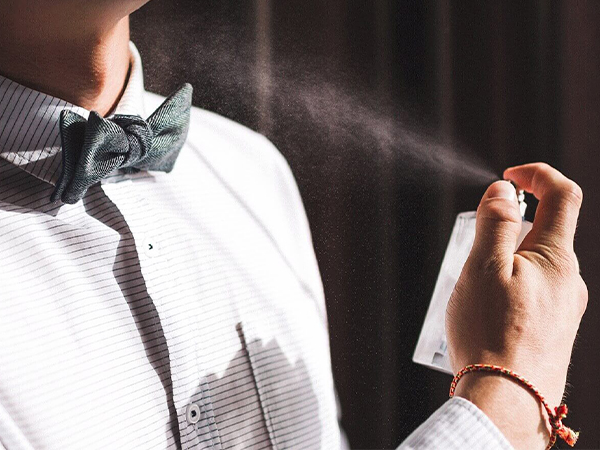
Choosing the right spots helps perfume last longer:
- Pulse points (wrists, behind the ears, neck, inner elbows): Diffuse the scent evenly and hold it longer.
- Hair and clothing: Hold scent for a long time, but keep in mind that some perfumes can stain fabric.
3. How to Test Perfume Longevity
Scent strips: Spray 1–2 sprays onto a test strip and track how long the scent lasts.
- Pros: Easy to do, doesn’t affect your skin..
- Cons: Doesn’t accurately reflect how long the scent lasts on actual skin.
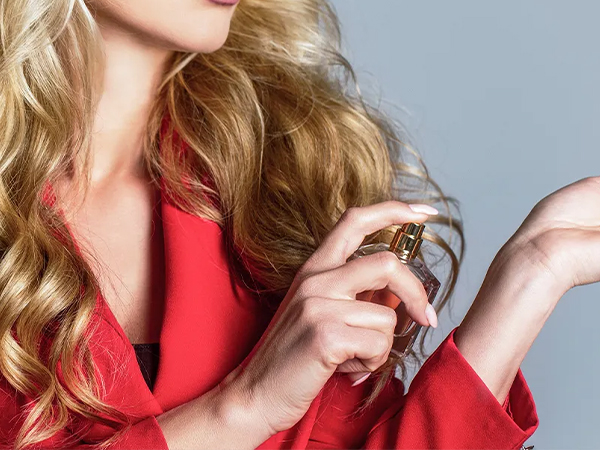
Direct skin test: Apply a small amount of perfume to your wrist or inner elbow (pulse-point areas). Track the scent at various time intervals.
- Pros: More accurately reflects on-body longevity.
- Cons: May irritate sensitive skin.
Consult user reviews: Read evaluations and feedback on websites, forums, and community groups.
- Pros: Offers objective input from many users.
- Cons: Longevity varies from person to person depending on individual body chemistry.
4. Tips to Make Perfume Last Longer on Your Skin
If you want your perfume to last longer, try these tips:
- Moisturize before spraying — hydrated skin holds fragrance better. Use an unscented lotion before applying perfume.
- Apply after a shower — clean, slightly damp skin grips the scent better.
- Don’t rub the perfume in — rubbing breaks the scent’s structure and accelerates evaporation.
- Use a base layer — apply body oil or Vaseline on your application spots to lock in the scent.
- Spray on clothing — some perfumes hold longer on fabric than on skin.
We hope this Catchers article has helped you better understand perfume longevity. With these insights, you’ll be better equipped to choose the right fragrance for you!